

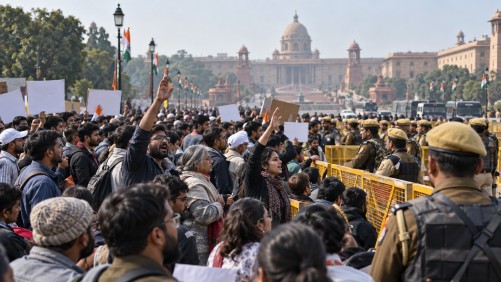
In the heart of India’s capital, Delhi, tensions are escalating as protests against the government continue for a second day. The Cockroach Janta Party (CJP), a youth-led political group, has accused Prime Minister Narendra Modi’s administration of fostering an environment of fear and suppressing democratic dissent. These demonstrations are part of a broader movement demanding the resignation of Election Commissioner Gyanesh Kumar, amid allegations of electoral mismanagement.
The protests, which have seen significant involvement from student groups and civil society activists, center on claims that a recent voter-list revision removed approximately 130 million names from India’s electoral rolls. Critics argue that this could disproportionately disenfranchise minority communities to the benefit of the ruling Bharatiya Janata Party (BJP). However, the BJP has dismissed these allegations, asserting that the revision aims to eliminate ineligible voters.
As authorities implemented extensive security measures across Delhi, including police barricades and restrictions on public transport and internet services, thousands of demonstrators were reportedly detained in an effort to prevent gatherings. Among those detained were three CJP leaders—Abhijit Dipke, Saurav Das, and Ashutosh Ranka—who were later released under conditions to prevent further public order breaches. Despite this, they have vowed to continue their protests, criticizing the government’s heavy-handed response.
Student activists like Neha Bora and Surbi Yadav have shared accounts of their experiences, alleging abusive treatment and overcrowded detention conditions. Yadav, a student at Delhi University, accused police of using excessive force and expressed her determination to keep protesting until their demands are addressed.
At a press conference, CJP leaders Saurav Das and Ashutosh Ranka expanded their criticism beyond the election commissioner to include broader accusations against Prime Minister Modi and Home Minister Amit Shah, claiming the government is using force to safeguard its political interests. The BJP has countered these claims, with spokesperson Gaurav Bhatia defending the voter-list revision as a legitimate effort to weed out deceased and illegal voters.
Adding to the political pressure, opposition leader Rahul Gandhi has publicly supported calls for accountability over the voter-list revision, accusing the government of electoral misconduct. This controversy has intensified scrutiny on the integrity of India’s electoral process, as protesters vow to maintain their pressure on the government to ensure transparency and uphold civil liberties.