

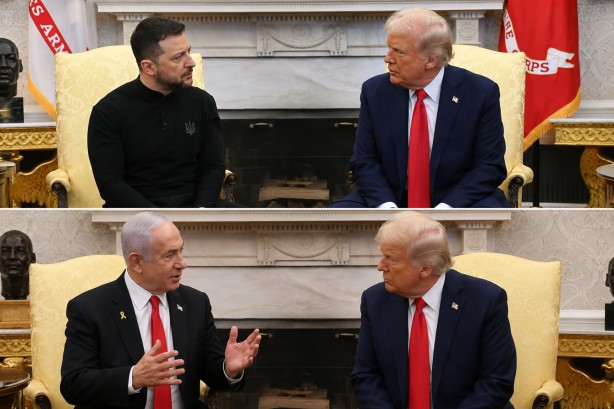
In recent diplomatic engagements at the White House, U.S. President Donald Trump hosted separate meetings with Ukrainian President Volodymyr Zelenskyy and Israeli Prime Minister Benjamin Netanyahu, both of which he described as constructive. While Trump refrained from sharing specific details of the discussions, the dialogues underscored the strategic partnerships the U.S. maintains with both nations amid evolving global challenges.
President Zelenskyy highlighted that his conversation with Trump centered on bolstering Ukraine’s air defense systems. A significant point of interest was the potential for Ukraine to license and produce Patriot missile interceptors domestically, a move that could enhance the country’s defensive posture. Additionally, the leaders revisited the importance of reigniting diplomatic talks, reflecting on the ongoing need for strategic cooperation between Washington and Kyiv.
Prime Minister Netanyahu’s visit to the Oval Office was his first since the U.S.-Israel joint military operations against Iran earlier this year. The meeting provided an opportunity for Netanyahu and Trump to discuss pressing issues in the region, including security threats from Iran and Lebanon. The talks also touched upon the ongoing efforts to expand the Abraham Accords, a series of normalization agreements between Israel and several Arab states that have reshaped Middle Eastern geopolitics.
These meetings occur as the United States continues to navigate its foreign policy strategies in both the Ukrainian conflict and Middle Eastern affairs. For Ukraine, the U.S. remains a critical ally, especially as the country seeks to strengthen its defense capabilities against ongoing threats. Similarly, Israel values American support in addressing regional security concerns and expanding diplomatic relations under the Abraham Accords framework.
The discussions with Zelenskyy and Netanyahu underscore the U.S.’s commitment to supporting its allies as geopolitical dynamics shift. Both Ukraine and Israel look to Washington for continued backing, reflecting the intricate web of international relations that shape current U.S. foreign policy. As global challenges persist, these diplomatic engagements highlight the enduring importance of strategic alliances.