

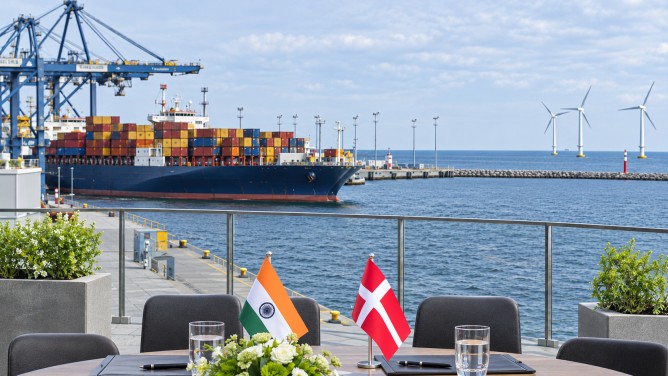
India and Denmark are enhancing their collaborative efforts in green energy, trade, and maritime development as part of their strategic partnership. This development follows Denmark’s Business Minister Martin Lidegaard’s visit to Mumbai and New Delhi from November 2 to 3, where he engaged with Indian government officials and business leaders to explore avenues for economic cooperation.
The two nations are working on the next phase of their Green Strategic Partnership, established in 2020, with plans to develop a new joint action plan to boost mutual economic and environmental interests. In Mumbai, Lidegaard toured facilities operated by APM Terminals, a division of the Danish shipping group Maersk, and discussed investment opportunities with Maharashtra Governor Jishnu Dev Varma.
In New Delhi, Lidegaard met with Commerce Minister Piyush Goyal to discuss expanding bilateral trade and improving business opportunities, particularly in the context of the proposed India-European Union free trade agreement. With more than 200 Danish companies operating in India and employing over 100,000 people across various sectors, the discussions aimed at deepening economic relations between the two countries.
Sustainable maritime development was also a key point of focus during the visit. Lidegaard’s talks with Union Ports and Shipping Minister Sarbananda Sonowal addressed environmentally friendly shipping, the modernization of port infrastructure, and the creation of green maritime corridors.
Renewable energy cooperation was another priority, with discussions with Renewable Energy Minister Pralhad Joshi centering on enhancing energy efficiency, strengthening clean energy infrastructure, and supporting India’s transition to a sustainable power system. Denmark’s involvement in solar energy development and its contribution to the International Solar Alliance further underline the commitment to renewable energy cooperation.
The intensified partnership between India and Denmark is expected to pave the way for new investment opportunities, technological exchanges, and sustainable development, all while strengthening the economic ties between the two nations.