

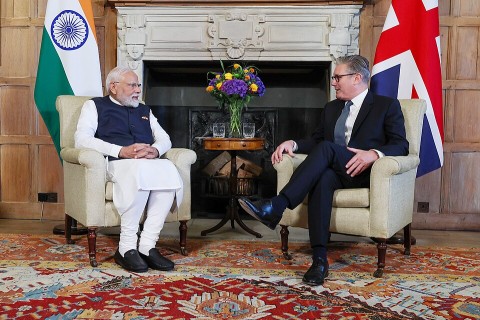
In a significant achievement, outgoing British Prime Minister Keir Starmer has secured a historic trade deal with India, finalizing the India-UK Free Trade Agreement (FTA) just before announcing his resignation. This diplomatic milestone was sealed during discussions with Indian Prime Minister Narendra Modi at the G7 Summit in 2026. The agreement, set to take effect on July 15, will launch the India-UK Comprehensive Economic and Trade Agreement (CETA), promising to deepen the trade relationship between the two nations, which already sees exchanges worth approximately £48 billion annually.
Starmer, who has consistently advocated for stronger ties with India, prioritized the trade deal as a central goal of his administration. He emphasized the significant potential for economic growth through this agreement, citing India’s increasing influence in the global economy and the advantages of enhanced and more cost-effective trade links between the countries. As Labour leader, Starmer worked diligently to strengthen connections with the British Indian community and foster a robust partnership with India. His leadership saw Labour committing to broaden cooperation in various domains, including trade, security, education, technology, and climate change initiatives.
Before his political career, Starmer established a notable reputation in the legal field, serving as Director of Public Prosecutions. He ascended to the role of Prime Minister following Labour’s sweeping victory in the 2024 elections. Despite initial achievements in stabilizing the economy and pushing forward with domestic reforms, Starmer’s tenure faced challenges. A series of policy hurdles and political setbacks eventually eroded his standing within the party.
In a heartfelt resignation speech, Starmer acknowledged the loss of confidence from members of his parliamentary party, who no longer viewed him as the appropriate leader to guide Labour into the upcoming general election. He expressed his respect and gratitude for their decision, marking the conclusion of a noteworthy era in British politics. His departure signals a transition point for the Labour Party as it navigates the political landscape ahead.