

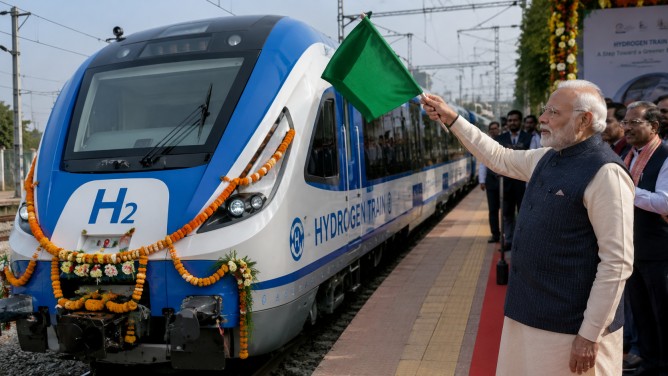
In a notable advancement for sustainable rail transport, India has inaugurated its first train powered by hydrogen fuel cells. Prime Minister Narendra Modi officiated the launch in Jind, Haryana, emphasizing the nation’s commitment to green energy technologies. This initiative marks a significant milestone in India’s efforts to reduce carbon emissions and promote cleaner energy sources.
The innovative train system incorporates a comprehensive hydrogen production and refuelling setup. On-site hydrogen generation is achieved through an electrolyzer, which is then compressed and stored. A dedicated refuelling station ensures the safe and efficient transfer of hydrogen into the train. This setup includes high-pressure compressors and hydrogen dispensers, all managed by an automated platform that oversees the entire refuelling process, ensuring safety and efficiency.
According to officials, this project underscores India’s advancing expertise in building indigenous hydrogen infrastructure, aligning with the objectives of the National Green Hydrogen Mission. The introduction of similar hydrogen refuelling systems is anticipated for several heritage railway routes, such as the Darjeeling Himalayan Railway, Kalka-Shimla Railway, and Nilgiri Mountain Railway, further extending the reach of sustainable rail solutions.
Hydrogen fuel cell technology in trains works by generating electricity through the combination of hydrogen and oxygen, with water vapor being the sole byproduct. This makes it a much cleaner alternative compared to traditional diesel-powered trains. The adoption of this technology is seen as a crucial step in reducing the transport sector’s carbon footprint, offering a more environmentally friendly solution for rail transportation.