

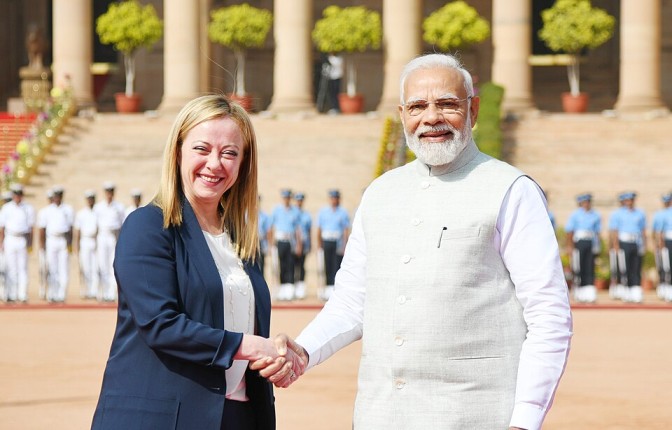
In a significant diplomatic development, India and Italy have elevated their bilateral relations to a special strategic partnership. This upgrade comes as part of efforts to boost two-way trade to €20 billion by 2029, as discussed during talks between Indian Prime Minister Narendra Modi and Italian Prime Minister Giorgia Meloni. The leaders aimed to fortify cooperation amid ongoing global conflicts and geopolitical instability, particularly focusing on maintaining a rules-based order. Concerns were voiced regarding the conflicts in Ukraine and West Asia, with both leaders emphasizing the critical need for de-escalation and diplomacy to ensure enduring peace. Additionally, they stressed the importance of freedom of navigation and the resumption of shipping activities through the vital Strait of Hormuz.
Prime Minister Modi’s visit to Rome marked the conclusion of a five-nation tour aimed at strengthening India’s energy security and expanding collaboration in key sectors such as defense, trade, investment, and emerging technologies. During their meetings, Modi and Meloni agreed to leverage the soon-to-be-signed India-European Union (EU) free trade agreement to enhance bilateral trade. Modi expressed his enthusiasm for the upgraded partnership, highlighting the India-Italy joint strategic action plan for 2025-29 as a practical framework for future collaboration. Both leaders agreed on the necessity of increasing trade from the current €14 billion to €20 billion by 2029.
Emphasizing regional connectivity, Prime Minister Meloni pointed out the importance of Italy and India working together to ensure freedom of navigation in the Indo-Pacific region and connecting it with the Mediterranean via the India-Middle East-Europe Economic Corridor (IMEC). Modi reiterated India’s stance on resolving global tensions through dialogue and diplomacy, also reflecting on regular consultations with Italy concerning the crises in Ukraine and West Asia. Meloni expressed a desire for a fair and lasting peace in Ukraine and optimism for continued peace negotiations in addressing the Iran crisis.
The two countries have agreed to establish a review mechanism, led by their foreign ministers, to monitor the joint strategic action plan for 2025-29, providing strategic oversight for the special partnership. This includes expanding collaboration in areas such as trade, defense, science, technology, and innovation. Modi highlighted the immense potential for cooperation in AI, quantum computing, space, and civil nuclear energy, noting the establishment of an India-Italy Innovation Centre aimed at connecting startups, research centers, and industries. Cooperation between the defense industries and militaries of both countries is also set to increase, with a roadmap in place for co-development and co-production.
Moreover, the two nations have committed to enhancing the mobility of students, researchers, and skilled workers, emphasizing the STEM sectors. They also plan to expand cooperation on skills development in accordance with labor market needs, which includes a joint declaration of intent to facilitate the mobility of nurses from India to Italy. This multifaceted collaboration underscores the deepening ties between India and Italy, aimed at fostering growth and stability through enhanced partnership and shared goals.