

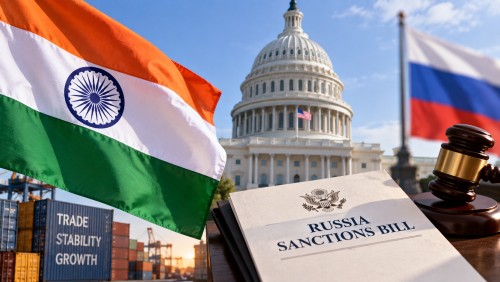
Amid escalating tensions over global energy trade, India has vowed to safeguard its economic interests following the approval of a U.S. sanctions bill targeting countries that maintain significant trade with Russia. The legislation, passed by the U.S. House of Representatives, could impose tariffs of up to 100% on major purchasers of Russian oil, potentially impacting India along with nations like China, Slovakia, Hungary, and Azerbaijan.
The Lindsey O. Graham Sanctioning Russia and Iran Act of 2026 passed the House with a 262-159 vote after previously clearing the Senate. It now awaits presidential approval to become law. The proposed measures have prompted concerns about their impact on India-U.S. trade relations and broader global energy markets.
India’s Ministry of External Affairs has expressed its commitment to ensuring energy security for its population of 1.4 billion. The ministry emphasized that India will continue to rely on a mix of energy sources, adjusting as necessary in response to market dynamics. The Indian government has already engaged in discussions with U.S. officials at senior levels to address the potential repercussions of the legislation.
In recent months, India has strategically increased its energy purchases from countries like the United States and Venezuela, seeking to diversify its energy portfolio while maintaining Russia as a key supplier of crude oil. The Indian government also plans to collaborate with trade and industry bodies to mitigate possible economic impacts.
The introduction of these significant tariffs has sparked debates about the future of international trade dynamics, particularly in the energy sector. As the geopolitical landscape shifts, nations like India are navigating complex alliances and dependencies to sustain their economic growth and energy needs.