

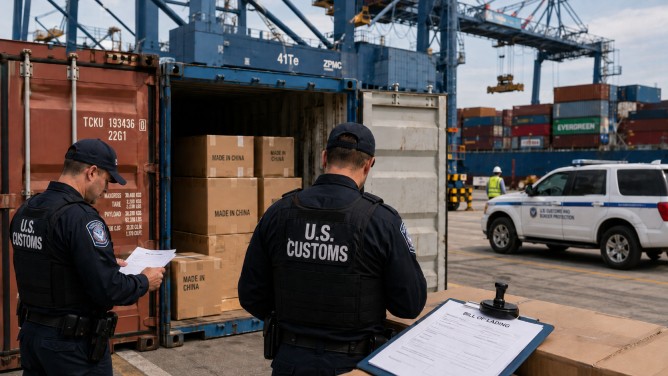
The United States has leveled accusations against 38 countries and the European Union, claiming they are part of a “shadow transshipment network.” This network allegedly enables Chinese goods, subject to steep US tariffs, to access the American market via intermediary nations. A report titled “The Great Transshipment Scam” suggests that this potentially unlawful practice could be valued at approximately $60 billion, reportedly causing notable losses in US tariff revenue.
Among those identified are nations and territories such as India, Canada, Israel, Japan, Mexico, South Korea, Taiwan, Brazil, and Indonesia. Others include Malaysia, Thailand, Turkey, Vietnam, Argentina, and Azerbaijan, along with Bangladesh, Cambodia, Chile, Colombia, Costa Rica, and the Dominican Republic. The list extends to Georgia, Jordan, Kazakhstan, Kenya, Laos, Morocco, Myanmar, Oman, Panama, Peru, the Philippines, Singapore, Sri Lanka, Switzerland, the UAE, and Uzbekistan.
The report estimates that in 2025, goods valued at about $67 billion bound for the US were allegedly rerouted from China through major hubs including Mexico, India, and Vietnam. This practice is believed to have led to an estimated $28 billion in lost US tariff revenue. The document highlights the Pune-Gujarat-Chennai corridor in India, noting that Chinese shipments of items such as electric pumps and compressors have supported local businesses along this route while simultaneously increasing competitive pressures on American manufacturers.
In response, the US is contemplating a range of measures aimed at curbing this alleged transshipment activity. Proposed actions include implementing more stringent inspections and interdiction processes, introducing additional tariffs, and imposing sanctions. Furthermore, there is consideration of restricting market access for those countries that are seen as facilitating tariff evasion.