

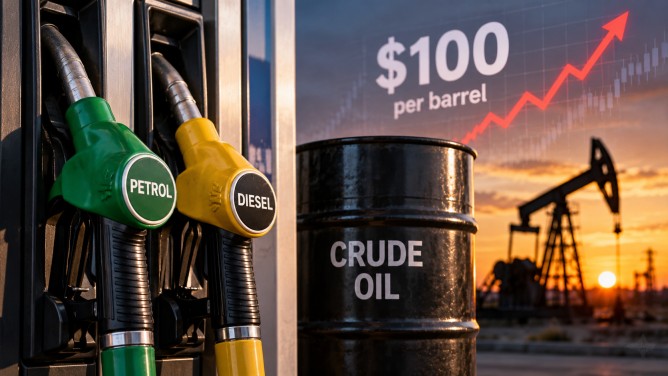
Fuel prices in several major Indian cities are experiencing upward pressure as crude oil import costs edge towards $100 per barrel. This surge is largely attributed to escalating geopolitical tensions and fluctuations in global oil markets. On Monday, the price of petrol in Delhi was recorded at ₹102.12 per litre, with diesel priced at ₹95.20. Mumbai saw petrol at ₹111.21 and diesel at ₹97.83. In Gurgaon, the rates stood at ₹102.97 for petrol and ₹95.64 for diesel.
Bengaluru experienced petrol prices at ₹110.82 per litre, while diesel was at ₹98.77. Bhubaneswar reported petrol at ₹108.97 and diesel at ₹100.68, contrasting with Chandigarh where petrol was priced at ₹101.54 and diesel at ₹89.47. These price variations across states are largely driven by differences in Value Added Tax (VAT), local taxes, and transportation costs.
The rise in crude oil prices coincides with increasing tensions in West Asia, particularly involving military confrontations between the United States and Iran. This has led to a hike in Brent crude prices, pushing India’s average crude import basket near its highest in three months. Given that India imports more than 88% of its crude oil needs, domestic fuel prices are highly susceptible to changes in international oil prices.
In the midst of these challenges, petrol consumption within India witnessed a 7.9% rise in August, reaching 3.824 million tonnes. Despite the escalating global costs, state-owned oil marketing companies, which account for over 90% of the country’s petrol stations, have largely maintained stable retail prices for petrol and diesel. These companies are now under considerable strain as they navigate the disparity between rising international crude prices and relatively unchanged domestic fuel rates.