

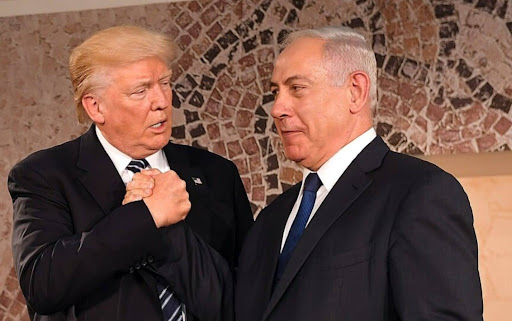
Gulf states occupy a uniquely difficult position in the US-Israel-Iran conflict: they are close American partners with significant economic ties to regional stability, but they have no direct role in the military decisions being made by the Trump-Netanyahu alliance that is reshaping their neighborhood. When Israel strikes a major Iranian target and Iran retaliates against regional energy infrastructure, Gulf states bear costs they did not choose. When the alliance generates escalations that raise global energy prices, Gulf economies absorb the consequences of decisions made in capitals they cannot control.
The South Pars episode crystallized this third-party problem with unusual clarity. Israel struck the gas field. Iran retaliated against regional energy infrastructure — which in practice means infrastructure in and around Gulf states. Energy prices rose. Gulf governments, facing economic disruption and heightened security concerns, turned to the one party they believed had some influence over the situation: Washington. Their message to Trump was clear — Netanyahu’s decisions are affecting us, and we need American restraint to protect our interests.
Trump responded by acknowledging his prior objection to the strike — a gesture toward Gulf concerns — and Netanyahu accepted a narrow limitation. But the episode also demonstrated the limits of Gulf influence. The limitation was narrow, the broader Israeli campaign continued, and the structural conditions for future escalations remained intact. Gulf states got a symbolic response to an economic and security reality that persists.
The third-party problem reflects a structural feature of the conflict: the parties most affected by Iranian retaliation — Gulf states — are not parties to the decisions that trigger it. This asymmetry creates ongoing friction between the alliance and its regional partners, and it gives Iran a strategic tool — the ability to impose costs on third parties through broad retaliation — that it uses deliberately.
Managing the third-party problem requires the Trump-Netanyahu alliance to take Gulf interests into account more systematically in its targeting decisions. The South Pars episode suggests that this is not yet happening consistently. As long as Israeli escalations can trigger Iranian retaliation that hits Gulf infrastructure, Gulf states will continue to bear the costs of a conflict they did not choose.